
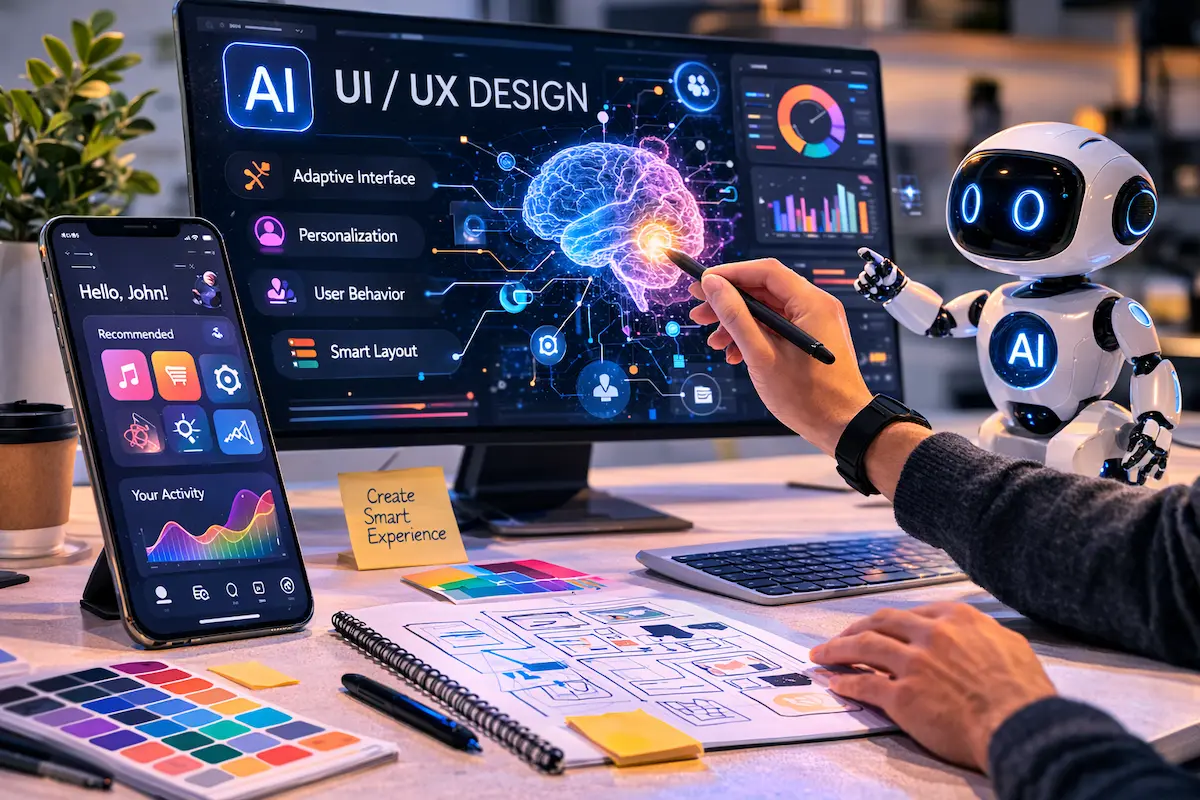
The world of UI/UX design is evolving faster than ever, and in 2026, artificial intelligence (AI) is at the forefront of this transformation. User expectations have skyrocketed; they no longer want just visually appealing designs—they demand experiences that are seamless, personalized, and intuitive. AI is helping designers meet these expectations by creating interfaces that adapt, anticipate, and even predict user behavior. From adaptive interfaces to predictive design, AI is redefining how we think about digital experiences.
The Rise of AI in UI/UX Design
Traditionally, UI/UX design involved a combination of user research, wireframing, prototyping, and iterative testing. While these methods are still essential, AI has introduced a new level of efficiency and creativity. AI-driven tools analyze massive amounts of user data to identify patterns and preferences, enabling designers to make informed decisions faster.
For instance, AI can track how users interact with a website or app, noticing which buttons are clicked most often, how long a user spends on a page, and where friction points occur. Designers can use this information to optimize layouts, flows, and visual hierarchy without relying solely on manual analysis.
Adaptive Interfaces: Personalization at Scale
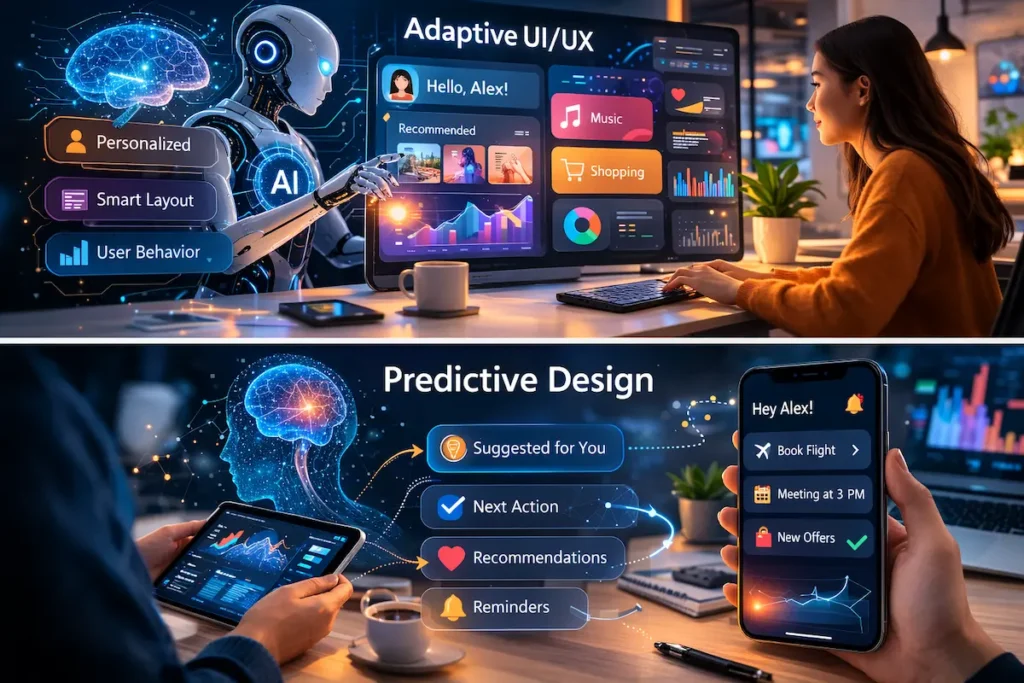
One of the most exciting AI-driven advancements in UI/UX is adaptive interfaces. Unlike static interfaces, adaptive designs change based on individual user behavior and context. For example, a music streaming app might prioritize playlists based on the time of day, location, or listening habits. Similarly, e-commerce websites can reorder product displays according to a shopper’s preferences, past purchases, or browsing history.
Adaptive interfaces make experiences feel tailored and personal, which improves engagement and retention. Users no longer feel like they are interacting with a “one-size-fits-all” interface; instead, every interaction feels intentional and designed for them.
Predictive Design: Anticipating User Needs
Another revolutionary concept in 2026 UI/UX design is predictive design. Using AI algorithms, products can anticipate what users need before they explicitly ask for it. This might include auto-filling forms, suggesting relevant content, or even triggering proactive notifications.
Take a travel booking app, for instance. By analyzing a user’s search history and preferences, AI could suggest destinations, flights, or hotels that match their style and budget—sometimes even before the user starts typing. Predictive design reduces friction, saves time, and enhances overall satisfaction, making digital experiences more effortless and enjoyable.
AI-Powered Prototyping and Design Tools
AI is also revolutionizing the design process itself. Tools like Figma, Adobe XD, and Sketch are incorporating AI-powered features that can generate wireframes, suggest color schemes, or optimize layouts based on design best practices. Some platforms now use generative AI to create multiple design variations in minutes, helping designers explore options quickly and efficiently.
This allows designers to focus on creative problem-solving and strategic thinking, while AI handles repetitive and time-consuming tasks. In effect, AI acts as a collaborative partner, not a replacement, augmenting human creativity with speed and precision.
Enhancing Accessibility Through AI
Accessibility is a critical part of modern UI/UX design, and AI is helping make digital products more inclusive. AI-powered tools can automatically generate alt text for images, detect color contrast issues, and suggest accessible layouts. Predictive AI can even tailor content for users with specific needs, such as recommending simplified navigation for elderly users or voice-controlled interfaces for visually impaired individuals.
By integrating AI into accessibility, designers can ensure that digital experiences are not only beautiful but usable by everyone, regardless of their abilities or circumstances.
AI-Driven User Research
Understanding users has always been at the core of UX design. AI accelerates this process by analyzing large datasets of user behavior, feedback, and engagement metrics. Natural Language Processing (NLP) can parse through thousands of user reviews or survey responses to identify trends and pain points.
This means designers can make data-driven decisions faster and more accurately than ever before. Instead of relying on small user testing groups, AI can simulate and predict user reactions at scale, helping teams iterate and refine designs with confidence.
Challenges and Ethical Considerations
While AI is transforming UI/UX, it’s not without challenges. Predictive design and personalization rely heavily on user data, raising concerns about privacy and security. Designers must ensure that AI-powered features comply with regulations and maintain transparency. Users should feel in control of their data and understand how AI is influencing their experience.
Moreover, over-reliance on AI may lead to designs that are too formulaic or lose the human touch. Balancing automation with creativity is essential to maintain authentic and engaging experiences.
Looking Ahead: The Future of AI in UI/UX
The integration of AI into UI/UX design is still in its early stages, but the potential is enormous. Future trends are likely to include:
- Multimodal interfaces: Combining voice, touch, and gesture inputs for richer experiences.
- Emotion-aware design: AI detecting user emotions and adjusting interfaces accordingly.
- Hyper-personalization: Interfaces that adapt not only to behavior but also to mood, context, and preferences in real-time.
- Predictive accessibility: AI proactively suggesting adjustments to make interfaces usable for all demographics.
Designers who embrace AI will be at the forefront of creating next-generation digital experiences, blending creativity, empathy, and technology to deliver truly remarkable products.
Conclusion
AI is no longer a futuristic concept in UI/UX; it is a current and transformative force in 2026. From adaptive interfaces to predictive design, AI is reshaping the way we interact with digital products. It enables personalized experiences, speeds up the design process, enhances accessibility, and helps designers make smarter, data-driven decisions.
The key to success lies in using AI as a collaborative tool, one that augments human creativity rather than replacing it. By doing so, designers can craft experiences that are not only efficient and intuitive but also meaningful and human-centered. The future of UI/UX is here, and AI is helping us design it.
Leave a Reply